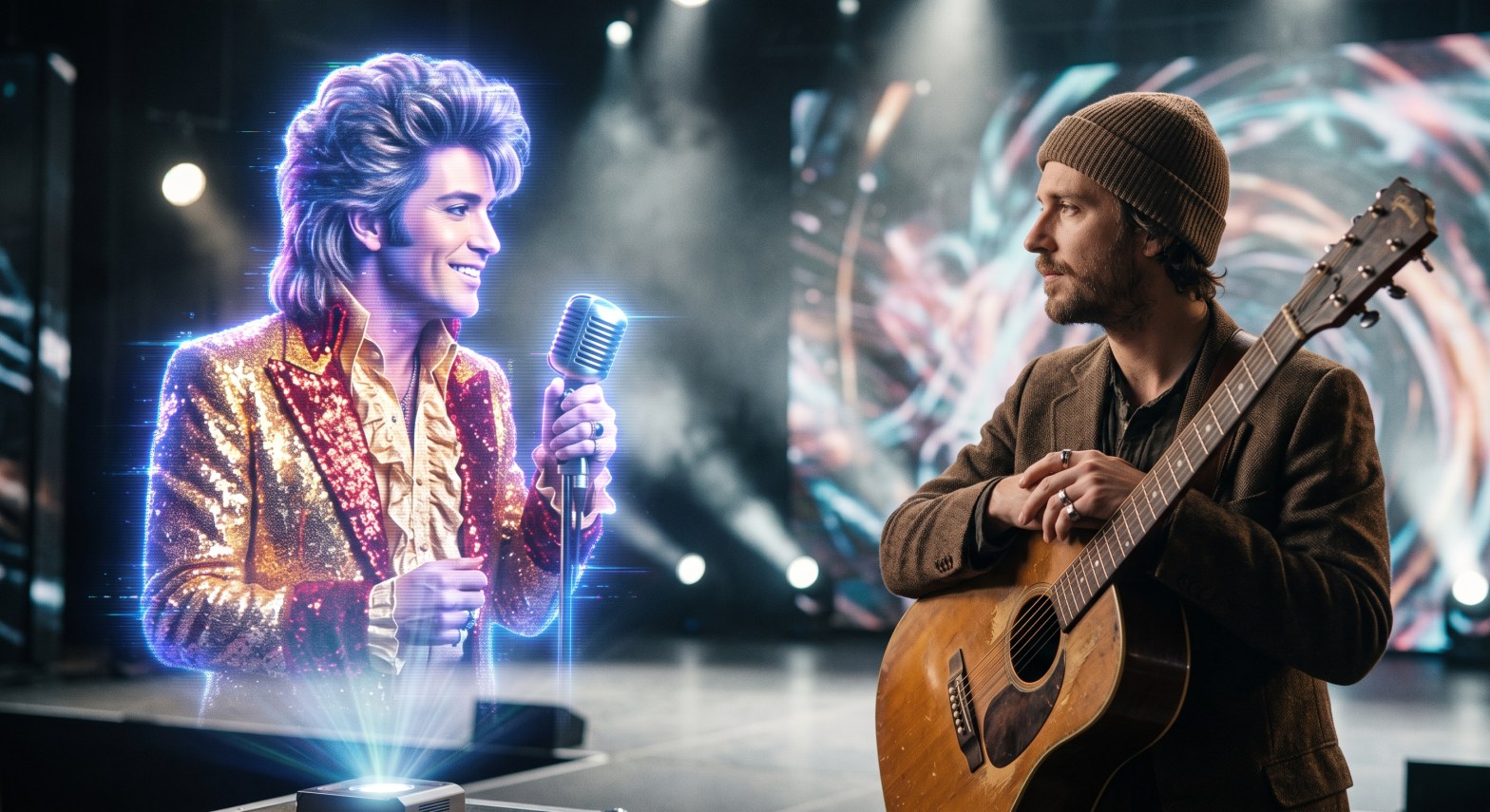
And the rules we built to protect artists are helping them do it.
I have developed a personal theory that may earn me a lot of hate (and maybe a few death threats). We’ve been sold the idea that artists need to protect their rights and collect their royalties, because one day their songs might make them a fortune. But what I keep seeing is people using copyright and other intellectual property tools to benefit legacy artists and milk old catalogs, clogging the revenue pipeline that should be funding the development of new artists. It has made me question copyright altogether. I think we should either tear it down or, better yet, rebuild it from scratch, so that it serves its true purpose: protecting music, musicians, and musical culture.
What pushed me to write this down was this video essay about Primary Wave, a company that buys into the estates of dead stars. I agree with most of the author’s commentary, but the video is about one company, and I think the problem is the system itself.
The Dead vs. The Living
Every year Forbes publishes a list of the highest-paid dead celebrities. In the 2025 edition, Michael Jackson came first with $105 million. Close behind were two members of Pink Floyd: keyboardist Richard Wright – who died in 2008, and Syd Barrett – who left the band in 1968 and died in 2006 made $81 million each. The Notorious B.I.G., murdered in 1997 made $80 million, which in the same year Primary Wave bought half of his estate.
In 2022, the writer Ted Gioia asked: “Is old music killing new music?” His numbers showed that the consumption ratio of old (>18 months old) versus new (<18 months old) songs in the US market were about 70:30 with the latter actually shrinking.
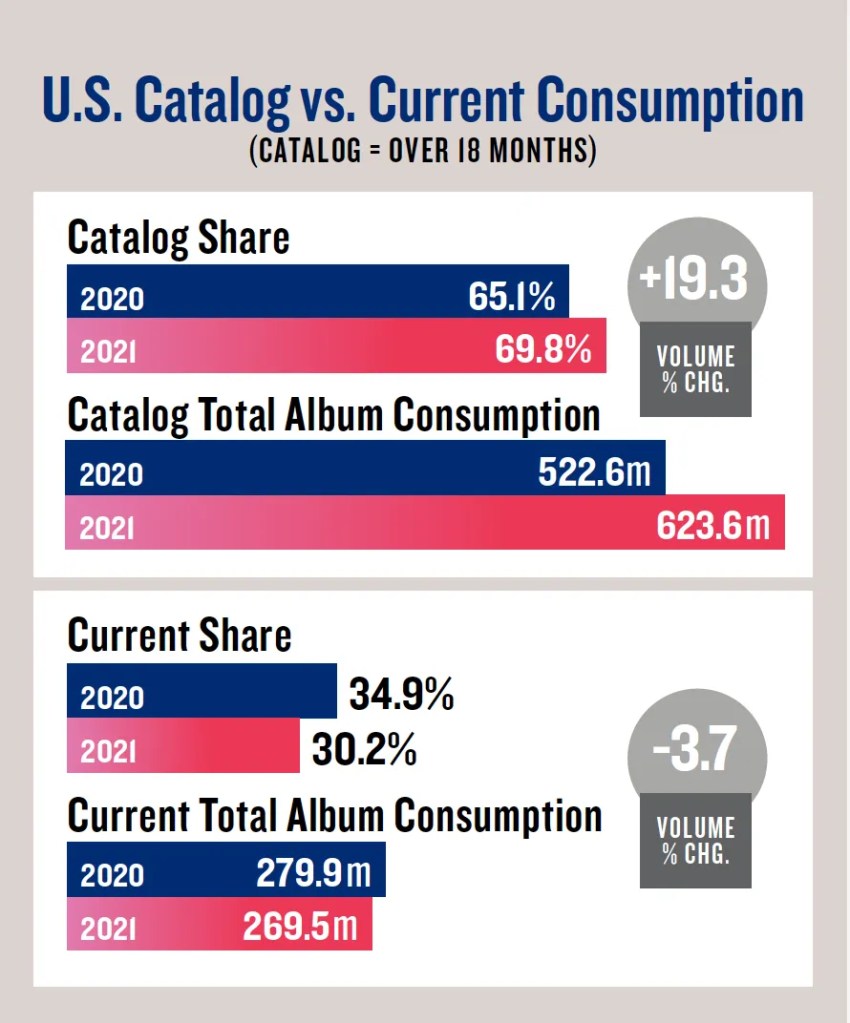
And his diagnosis was even blunter: “The people running the music industry have lost confidence in new music.”
Enslaving the Dead
With new technologies like holograms, we can now bring the dead back to perform in front of a live audience. Primary Wave bought 50% of Whitney Houston’s estate, including music and film royalties, merchandise, her name and likeness. The deal valued the whole estate at $14 million. What followed was a remix, a hologram tour, a hologram residency in Las Vegas, a biopic, and a great deal of merchandise—including a slot machine.
And AI, the other technology disrupting everything right now, can create tracks an artist never recorded, putting words in their mouth they may never have agreed to.
Well, dead people don’t complain, don’t misbehave, don’t cause new scandals, and don’t negotiate for better deals. They’re the perfect product, aren’t they? In a way, it’s like enslaving the dead.
A Good Product is a Predictable and Repeatable One
In 2024, Sony paid around $600 million for half of Michael Jackson’s catalog, bought Queen’s recordings and publishing for £1 billion, and paid $400 million for Pink Floyd’s recordings. The same year, Blackstone bought the Hipgnosis Songs Fund for $1.58 billion. In May 2026, Sony agreed to buy Blackstone’s music catalog, Hipgnosis songs included, for a reported $3.5–4 billion. Later in July, Primary Wave closed its purchase of Kobalt, creating a company estimated at around $7 billion.
Songs are also being turned into bonds: companies borrow from investors against a catalog’s future royalties—a practice pioneered by David Bowie. The rating agency KBRA says it has rated $12.9 billion of music-royalty-backed securities between 2020-2025, more than $3.3 billion of it in 2025 alone. Investors don’t buy these because they love the music – they buy them because a proven song is a predictable cash flow.
I’ve seen the same logic up close. Over the past few years, I’ve been approached by business people who want to buy or license music from artists and labels with strong catalogs. The pitch is a lump sum today, paid for with a share of the catalog’s future earnings, that the artist can invest in new music.
On paper, it’s a good deal, especially for independents: you can make your next album without crowdfunding it or chasing an investor. But look at who gets the offer. You only qualify if you’ve already had success and investors believe your songs will keep earning. And look at what’s being bought. The investor isn’t betting on your new album; they’re buying your old songs. The new album is just what you do with the money. Capital doesn’t discover artists—it follows them.
To me, it’s the same game in different clothes. Back in the day, at least what I’ve heard about in Thailand’s mainstream labels, management did it by decree: artists were forced to make something similar to their previous hits, or handed a “song formula” to follow so the next single would be a hit. Today the formula comes in a spreadsheet.
Either way, the logic is the same: pay for what already worked.
A Law Written for the Dead, and Those who Reap from Them
Today, in Thailand, a song is protected for the author’s life plus 50 years, and a sound recording for 50 years. It used to be the same in the US and most of Europe, until both moved to life plus 70: Europe in 1993, the US in 1998. The US Copyright Term Extension Act of 1998 was lobbied for by Disney, whose Mickey Mouse (just the 1928 Steamboat Willie version, actually) was due to enter the public domain in 2004. The extension bought Disney 20 more years. Mickey finally entered the public domain in 2024.
Europe did the same for recordings. In 2011, the EU extended protection for sound recordings from 50 to 70 years, a change nicknamed “Cliff’s law” after Cliff Richard, its best-known champion. It took effect in the UK in November 2013, just in time to keep the Beatles’ 1963 recordings out of the public domain.
But copyright was never designed as a pension plan for great-grandchildren. Britain’s first copyright law, the Statute of Anne of 1710, and America’s first, in 1790, gave authors 14 years, plus 14 more if they were still alive to renew. The Statute of Anne’s official title begins “An Act for the Encouragement of Learning.” The US Constitution allows copyright only “for limited Times,” to “promote the Progress of Science and useful Arts.”
The deal was simple: creators get exclusive rights for a limited time, as an incentive to make new work. After that, the work belongs to everyone, so the next generation can build on it. A dead songwriter can’t be encouraged, and the extra years barely matter to living ones either. It’s an inheritance, and increasingly, that inheritance gets sold to a fund whose investors care about the yield, not the music.
And here’s something else to chew on. In free-trade talks that both sides want finished by the end of 2026, the EU has asked Thailand to move to life plus 70. Before we say yes, look at the numbers. In 2024, Thailand paid about $6.5 billion to use foreign intellectual property, while earning only $0.4 billion from its own. By the way, that’s all IP, not just music.
Still, guess which side of the ledger 20 more years would help.
Why is Older Music More Valuable?
I’m in my mid-forties. I work in the music business, yet I rarely go looking for new music. Most of what I play is what I grew up with: grunge, metal and alternative rock.
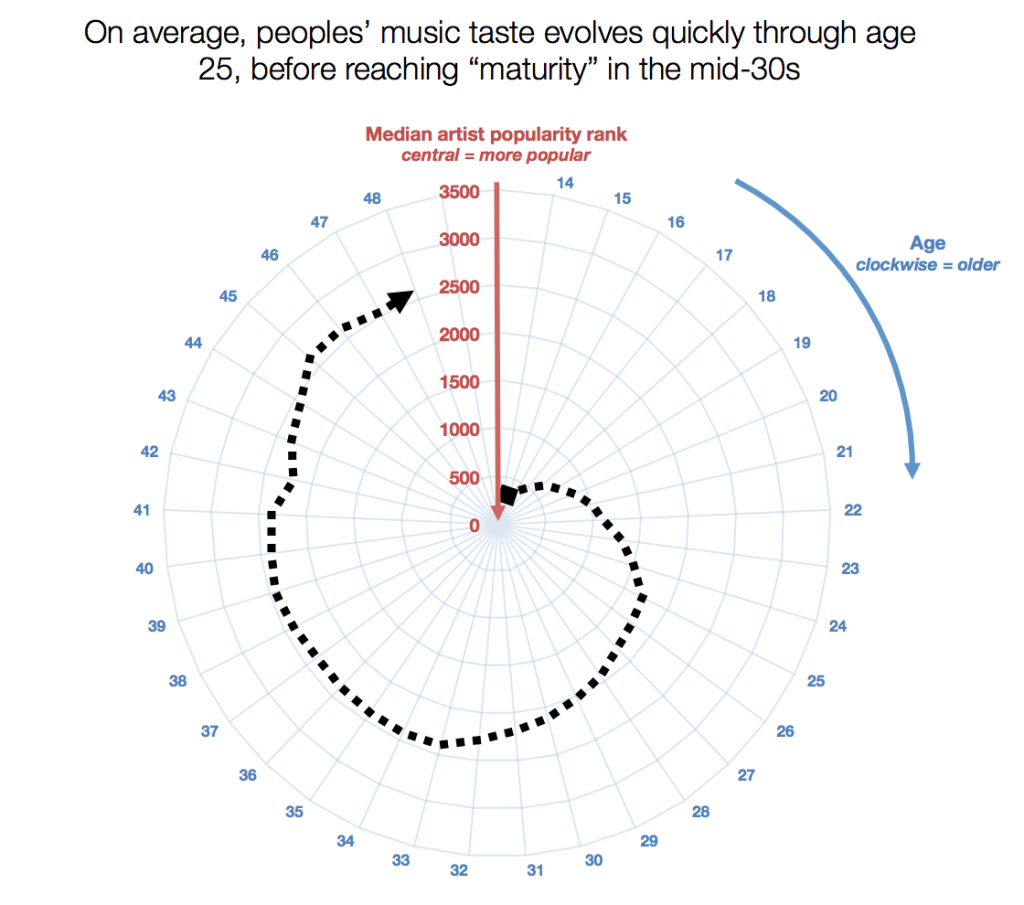
According to a 2015 analysis by Ajay Kalia, using data from US Spotify users and The Echo Nest, a music intelligence firm, found that by around age 33, the average listener has stopped keeping up with popular music. The music we stay loyal to is the music we met as teenagers. When Seth Stephens-Davidowitz analyzed Spotify data for The New York Times, the most important years for forming adult taste were 13 to 16 for men and 11 to 14 for women.
I once had a long conversation with an older indie rock musician whose records I grew up with. He told me a band only really starts to succeed once it has survived at least 10 years. His reasoning: the fans who found you as teenagers were broke, or living on pocket money from their parents. Ten years later, they’re working professionals with their own money to spend.
Put those together and you have my theory of why older music is worth more. We fall for music as teenagers, stop exploring in our thirties, and do our real spending later, on the artists we loved growing up. When the US Bureau of Labor Statistics broke down 2013 spending by age, households headed by 45-to-54-year-olds earned and spent the most, including about two and a half times as much on entertainment as under-25s. And it’s not the streams: a 45-year-old’s Spotify subscription costs the same as a 25-year-old’s. The money is in concert tickets, reissues, box sets and VIP packages.
The cynical read: investors know all this. People like me are the target market. So they buy old music and market it to the people who finally have money to spend, and the marketing push that could have gone to new music goes to nostalgia instead. Meanwhile, by the math of that indie rocker, a new band has to survive ten years before their fans can afford it, in a system that increasingly pays the ones who already made it.
Unclogging the Pipe
Humans have created art probably since the dawn of humanity. The oldest known cave painting is estimated to be at least 44,000 years old, and the oldest musical instrument even older at up to 60,000 years old. Music and other creative arts were not commercial products until recent history. They were created by the people for the people used in social gatherings, rituals, customs and culture. Art was like a glue that held a society together, and artists built upon each others works adding their own take to a song that nobody knows who wrote but all can sing, like the tradition of Blues.
But then when societies became bigger and more complex, people’s skills and duties became more specialized, and the arts became a product to own, buy and sell – thus, the profession of “artist” is born, and copyright was created to protect the income of that artist, which then finally became a the tool to protect and create value for investors who don’t even care about music in today’s world.
I don’t have a perfect fix, but here’s where I’d start:
- Stop extending terms: Resist life plus 70 in trade deals. The public domain is where the next generation gets its raw material.
- Make the old fund the new: For example, since 2024, France has taxed music streaming services 1.2% of their French revenue to fund its national music center, the CNM. However, Spotify passed the cost on to French subscribers…
- Give rights back to the living: Here are some examples: EU’s 2011 law came with a “use it or lose it” clause, if a label stops marketing the sound recording after a certain period, the performer can take it back; US law lets creators terminate transfers after 35 years.
- Change payment models to one that follow the listener: Under a “user-centric” payment, your subscription goes to the artists you actually listen to, instead of the current pool model that is dominated by everyone else’s plays. It won’t save new music on its own, but it would stop fans of new music subsidizing the old.
- Spend on the living: Buy the ticket, the T-shirt, the record, from an artist who can still show up to the gig. We don’t need a hologram.
Anyway, Artists, Protect Your Rights
We tell young artists to protect their rights because one day their songs might make them rich. It’s not bad advice. It’s just incomplete. A system that rewards owning songs rewards owning old songs most of all, and more and more of those old songs belong to funds, often holding the work of people who can’t spend the money, can’t make anything new, and can’t say no. Because they’re dead.
I’m not saying we shouldn’t care about dead artists—absolutely not! I’m a huge Nirvana fan, and Kurt Cobain is my musical god. The irony isn’t lost on me: in 2006, Courtney Love sold a 25% stake in his song catalog to a three-month-old company called Primary Wave, and that year Kurt knocked Elvis off the top of Forbes’ list of top-earning dead celebrities. Artists whose work inspired so many people deserve to be remembered and honored, and their legacy should live on through the next generation of artists, who will inspire the next generation of fans, and so on. They just don’t need to be turned into products for investors to milk, clogging the pipeline that should be funding new artists and new music.
Remember the dead. Support the living.
By Py Piyapong Muenprasertdee
Remark: Edited for clarity and style using AI. The concepts and arguments are original.

