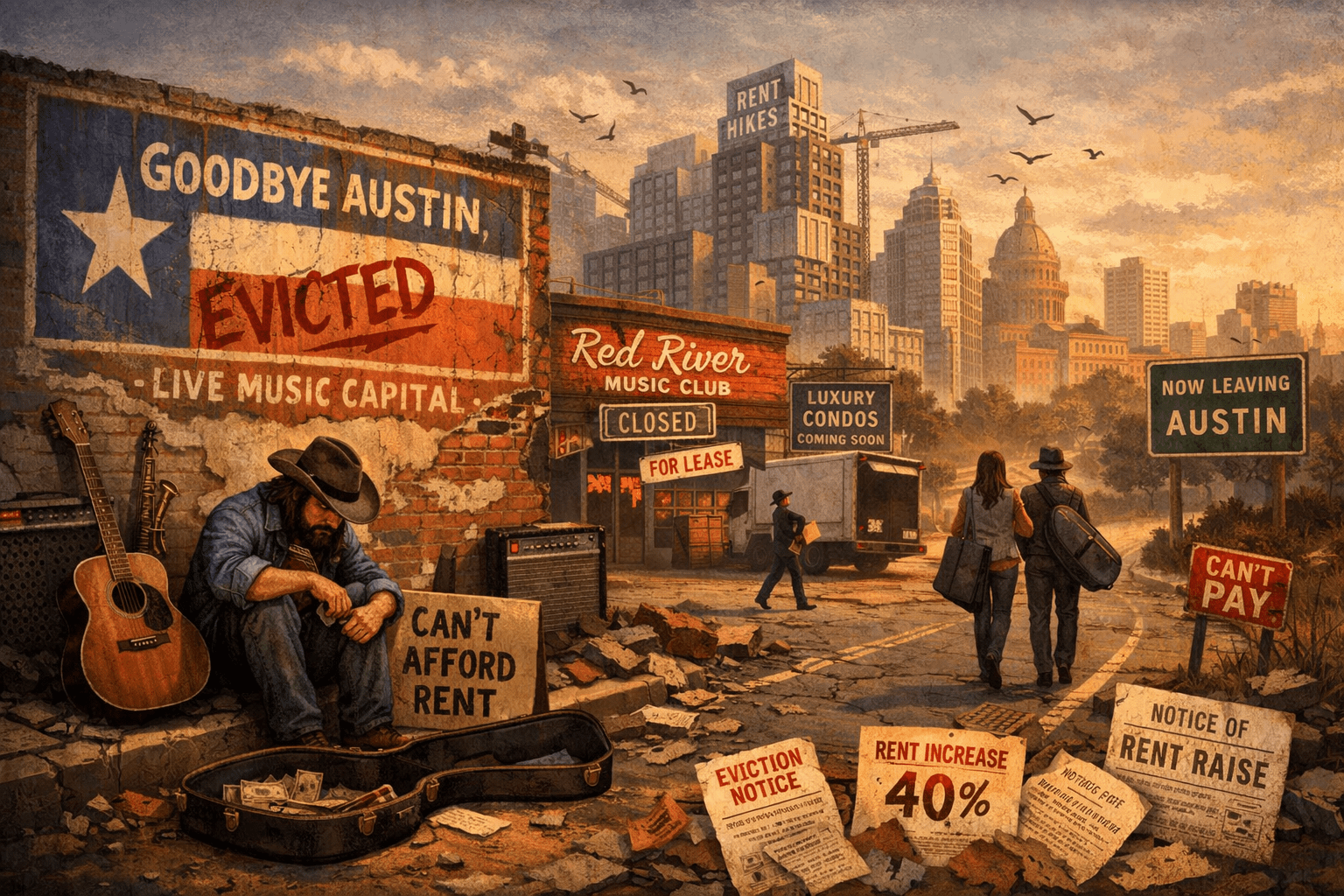
I wrote an article quite a while ago titled ‘Reasons why the Government should pay for Creative Arts‘. I still stand by every word of it. However, I haven’t yet tackled the even more difficult question that follows: How should the government actually pay for them?
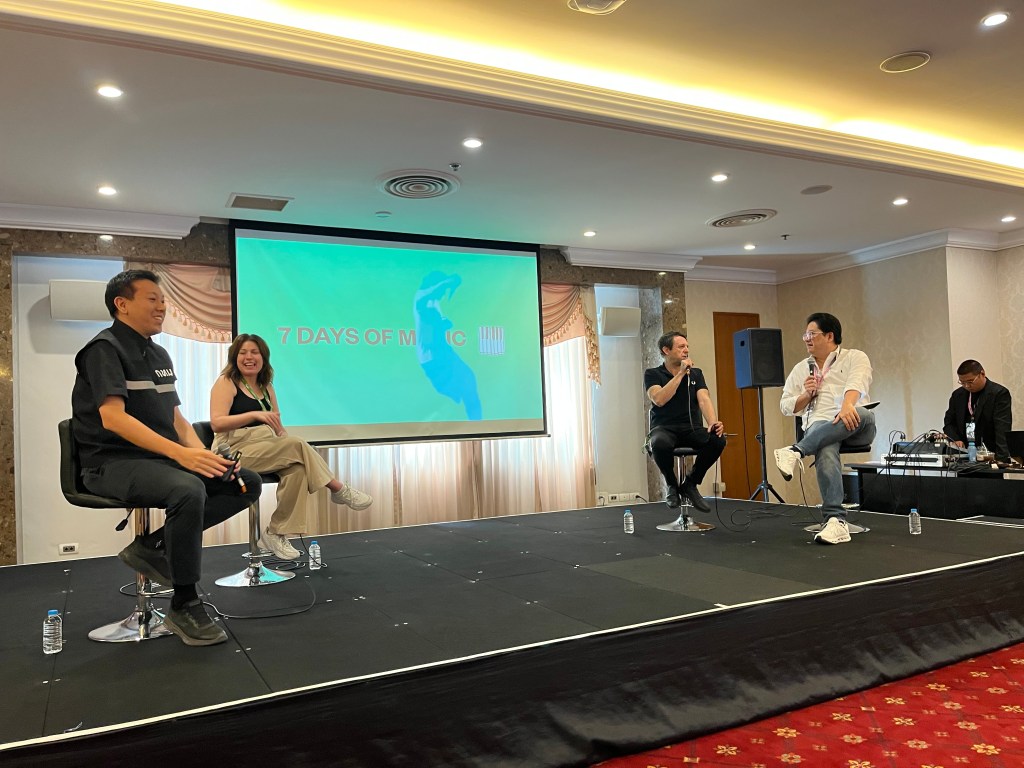
This past January at the Bangkok Music City (BMC) conference, I attended a panel titled ‘Make it a Better Place: How music makes a city better’. It featured a powerhouse lineup: Bangkok Deputy Governor focusing on education, social issues, and culture, Sanon Wangsrangboon; The Great Escape Partnerships Coordinator, Marie Robinson; and Former Vice President of SXSW Music Festival, James Minor.
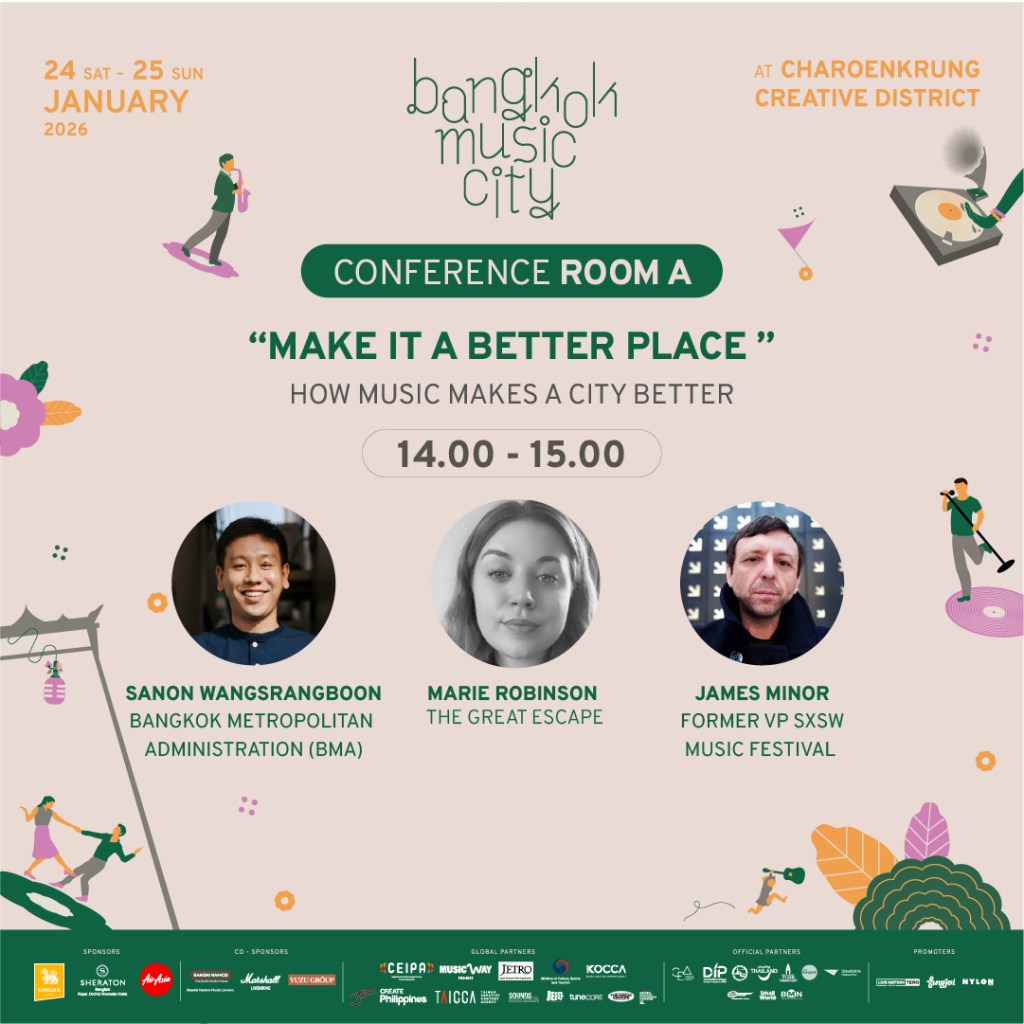
Austin’s Hotel Occupancy Tax (HOT)
My BMC co-founder, Pongsiri Hetrakul who was also the moderator, asked the panelists about how each of their governments supported local music. James Minor pointed to Austin’s Hotel Occupancy Tax (HOT) of 11%, consisting of a 9% municipal occupancy tax and an additional 2% to support local music because music is one of the key drivers of tourism to the city.
At first, I thought it was brilliant. But after sitting on it for a moment, I started to wonder if it was the right thing to do—charging the tourists who are only there for a few days versus the landlords, real estate companies, and businesses who raised prices for rent and everything else making the local musicians not able to afford living in Austin, who are the very people who made Austin cool in the first place?
I’ve visited Austin, TX three times. The first for SXSW 2013; the second was on a business trip with the Thai government agency TCEB (Thailand Convention and Exhibition Bureau), where we met with SXSW executives and C3 Presents, the company behind festivals like Austin City Limits and Lollapalooza; and the last trip for SXSW 2019.
From those visits, along with my own research, I’ve come to believe that SXSW played a key role in turning Austin into a hotbed for tech startups. One reason is the festival’s Interactive segment—one of the three main pillars of SXSW alongside Music and Film—which has hosted the launches of platforms like Twitter in 2007 and Foursquare in 2009. And from conversations with people I met there, the impression was clear: the startup scene had grown so large that Austin was often described as something close to a second Silicon Valley.
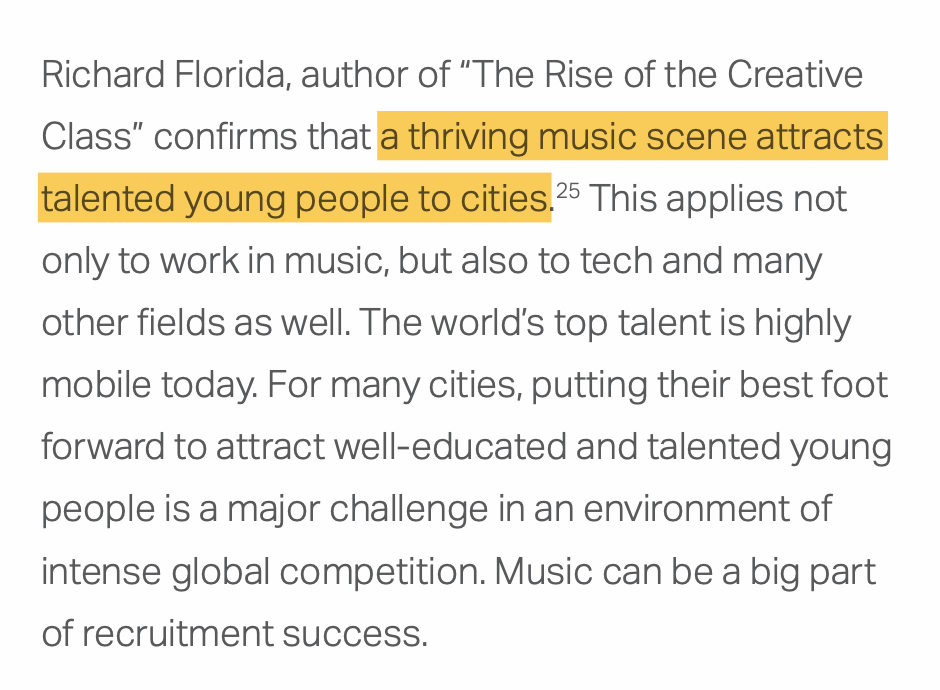
I am a firm believer that creative cities attract creative talent, which I refer to the book ‘The Mastering of a Music City’ on page 27 mentioning Richard Florida’s ‘The Rise of the Creative Class’ (2002), which argues that vibrant cultural environments are magnets for innovative and highly skilled people.
That’s why I believe the music, arts, and the ‘weirdness‘ of Austin were exactly what drew creative and ambitious minds to the city in the first place.
Music Cities and Gentrification
There has been plenty of concern—and debate—around the issue of gentrification, often defined as “the process whereby the character of a poor urban area is changed by wealthier people moving in, improving housing, and attracting new businesses, typically displacing current inhabitants in the process.”
But that raises an obvious question: why would wealthier people want to move into a crowded, struggling neighborhood in the first place?
My answer: Because that “poor” neighborhood happened to be cool.
And it was cool because of the art, culture, and creative scenes built by the very people who lived there in the first place. Ironically, those same communities often end up being pushed out once real-estate prices rise—driven partly by more affluent “creative class” newcomers who move in to experience the vibrant environment that once existed.
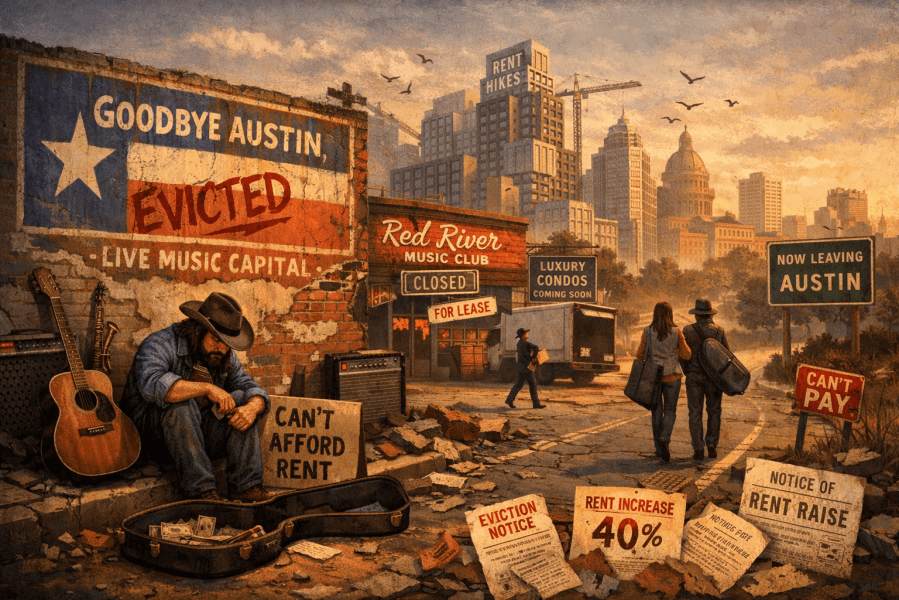
So when that light bulb went off in my head, I raised exactly that point during the Q&A:
“If local musicians and venues are struggling to survive, isn’t it partly because new residents and companies moving in have driven up rents and the cost of living? If that’s the case, shouldn’t we be taxing them instead of the music tourists?”
It seemed to strike a chord with both the panelists and the audience. While some appeared to agree with the logic, no one had a clear answer to the tougher follow-up: How exactly should governments generate the tax revenue needed to support local music?
While doing more research for this article today, I came across a few interesting details.
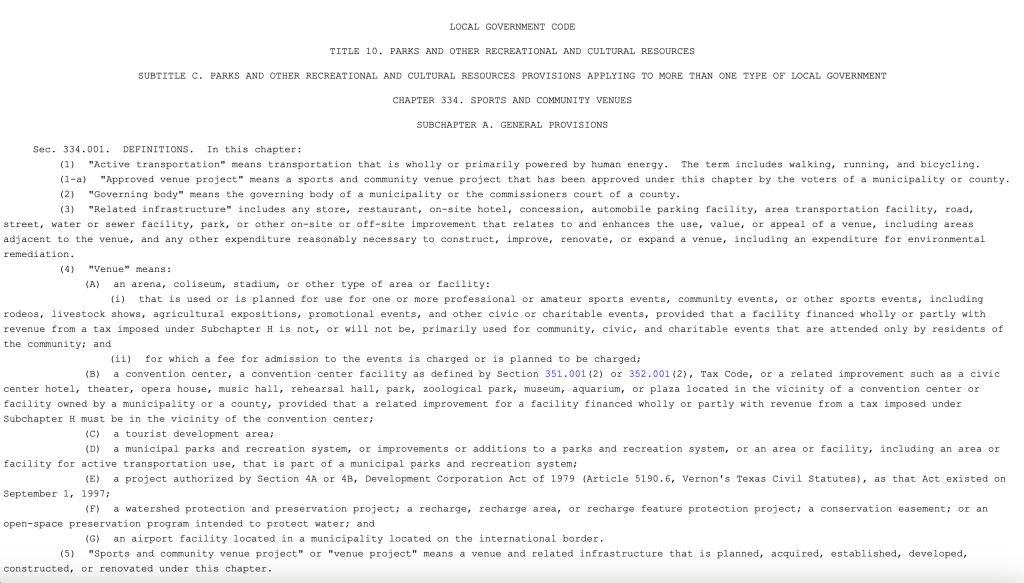
First, the additional 2% tax within Austin, Texas’s Hotel Occupancy Tax (HOT) is imposed on each hotel charge specifically to finance what the city calls a “venue project.” (Source: What is the City of Austin’s Hotel Occupancy Tax rate?, AustinTexas.org)
Digging deeper, a “venue project” under Texas state law includes facilities such as arenas, coliseums, stadiums, convention centers, municipal parks and recreation systems, as well as watershed protection and preservation projects. This was outlined in an article by Andrea Drusch in the San Antonio Report (October 20, 2025).
Another hot topic is how the city actually spends that revenue. Roughly 70% of Austin’s total HOT income goes toward the convention center and tourism promotion. The city is currently planning to spend $1.6 billion on a new convention center, a project that would tie up around 70% of HOT funds for the next 30 years. The proposal has sparked criticism from local artists and cultural organizations, who argue that the distribution of funding heavily favors large tourism infrastructure over grassroots cultural support. (Source: ‘The Magic Hole’ slams spending for new convention center, TheAustinBulldog.org, March 2, 2025).
Governments Work in Silos, So Does Their Funding
Looking at the case of Austin’s Hotel Occupancy Tax (HOT)—and the straightforward logic behind it—that local music needs funding, music attracts tourists, tourists bring money to the city, and therefore tourists should be taxed to support it—as explained in “Hotel Occupancy Taxes in Austin” by Michael Searle, Chief of Staff to Councilmember Ellen Troxclair at the City of Austin—reminded me of my own frustrations working with government agencies in Thailand.
Over the years, I learned a simple but discouraging reality: it is extremely difficult to secure funding for projects that sit between ministries or departments. When officials review a proposal, if it doesn’t fall neatly within their mandate, the most common response is to pass it along—or reject it outright.
Before Bangkok Music City (BMC) finally launched in 2019, I spent five years pitching the idea to various government agencies. From the beginning, my vision for BMC was clear: it would be both a music showcase festival and a business conference for the music industry. But because the concept crossed several policy areas—culture, trade, tourism, and industry—it often fell into a bureaucratic void.
Still, I tried to make the case that music could generate value for other sectors. After all, governments already recognize similar spillover effects in other creative fields. A good example is film-induced tourism, which is widely understood to attract international visitors and generate significant economic impact. Within the Ministry of Tourism and Sports, there is even a dedicated agency—the Thailand Film Office (TFO)—that oversees foreign film productions, including filming permits and incentive programs, precisely because films can promote the country as a travel destination.
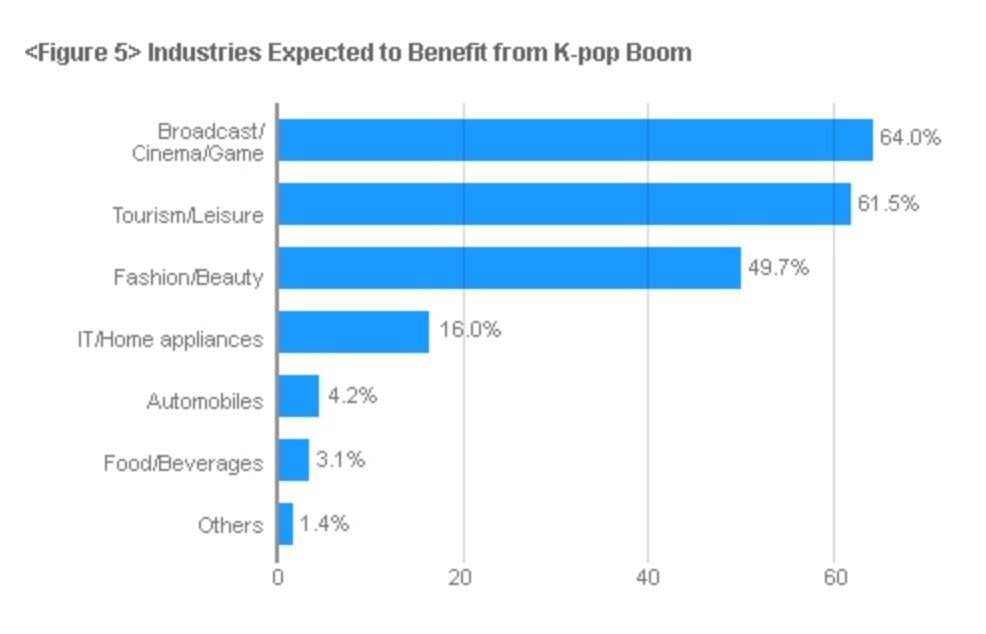
Using that logic, I often presented a case study from South Korea. A report published by the Korea Foundation illustrated how K‑pop generates ripple effects across multiple industries—from tourism and fashion to home appliances and automobiles—demonstrating how music can function as a powerful economic driver. Unfortunately, the argument mostly fell on deaf ears.
When I approached the Ministry of Culture, the answer was different but equally definitive. the answer was clear but discouraging. Because BMC focused on contemporary music, they explained that it did not align with their primary mission of preserving traditional Thai culture and music. Even though the ministry has the Office of Contemporary Art and Culture (OCAC), their interpretation of “contemporary art” tends to lean more toward visual arts than performance. And when it comes to music, their definition of “contemporary” often refers to classical or jazz, or music that incorporates traditional Thai elements. In other words, the music sector existed within their framework—but only loosely, and without the structural recognition needed to justify meaningful policy support.
Another example came when I approached the Department of International Trade Promotion (DITP) under the Ministry of Commerce and presented BMC as a platform that could help expand international music trade and business opportunities. Their response, however, was straightforward: since the project involved music, it should fall under the responsibility of the Ministry of Culture. Déjà vu much?
Breaking the Silos: The THACCA Proposal
There was a glimpse of hope when the National Soft Power Strategy Committee was established as an interim body ahead of the proposed creation of the Thailand Creative Culture Agency (THACCA). The concept was promising: a cross-ministerial structure designed to support music and the broader creative industries, modeled after agencies such as Korea Creative Content Agency (KOCCA) in South Korea and Taiwan Creative Content Agency (TAICCA) in Taiwan. These organizations were created precisely to coordinate policies across government departments that would otherwise operate in isolation.
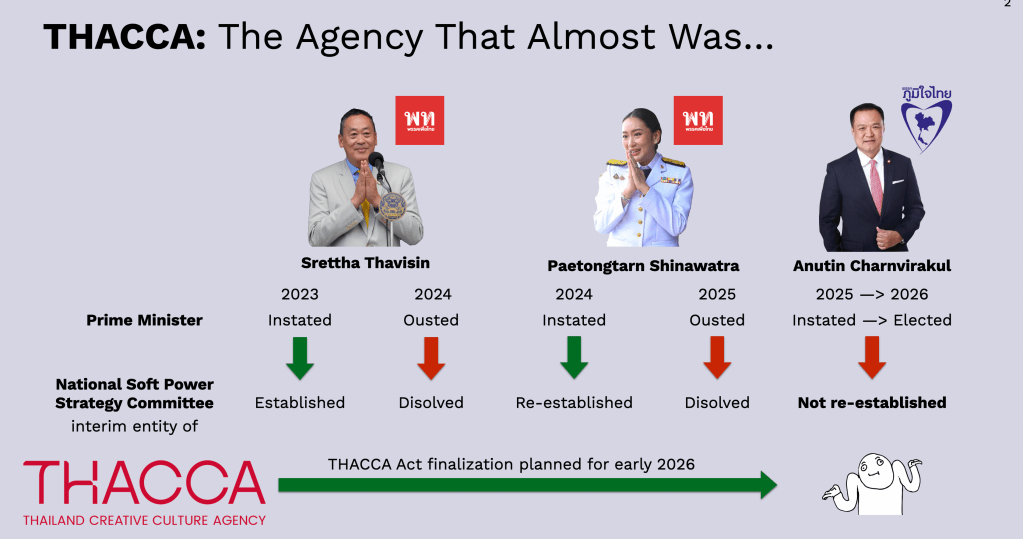
Unfortunately, politics intervened. The initiative stalled after two prime ministers from the Pheu Thai Party who had championed the project were successively removed from office—one in 2024 and another in 2025. Following the 2026 general election, the Bhumjaithai Party came to power with Anutin Charnvirakul as prime minister. For now, there has been little indication that the effort will be revived anytime soon.
So, how should governments fund music and the arts?
I strongly believe that society prospers from art—and that governments benefit directly from it—as I argued in my article “Reasons why the Government should pay for Creative Arts.”
My proposal, therefore, is simple: tax the beneficiaries of music and the arts, particularly those profiting from them through capitalistic models.
To do this properly, governments need to analyze the full value chain surrounding music and culture. Instead of relying on straightforward but simplistic logic—or the bureaucratic silos of government agencies—we should identify where value is actually being captured and direct taxation there.
If vibrant music and arts scenes make a city so attractive that businesses move in, property values rise, and rents increase to the point that musicians and artists can no longer afford to live there, then those benefiting from that economic uplift should help pay for sustaining the ecosystem that created it in the first place.
After all, if culture is what made the city cool enough for them to profit from, shouldn’t they help foot the bill?
Conclusion
Despite my earlier frustrations with government systems, that chapter is largely behind us. Bangkok Music City (BMC) has fortunately received support and funding from several government agencies over the years—though, of course, I wouldn’t complain if it were enough to fully sustain the event.
I would like to express my sincere gratitude to the Thai government agencies that have supported BMC, whether from the very beginning or more recently.
The Thailand Convention and Exhibition Bureau (TCEB) supported BMC from its earliest days and, in fact, introduced Pongsiri Hetrakul to me—who later became BMC’s co-founder.
The National Innovation Agency (Public Organization) or NIA understood what BMC aspired to become—a Thai counterpart to SXSW in both technology and creativity—and has supported us since our very first year.
The Creative Economy Agency (Public Organization) or CEA, whose mission closely aligns with BMC’s goals, has supported the event by sponsoring its venues and facilities and has repeatedly invited me to contribute to many of its initiatives.
The Department of Intellectual Property (DIP) under the Ministry of Commerce (MOC) has supported BMC’s intellectual property–related programming while continuing its important role in protecting the rights of music creators.
The Tourism Authority of Thailand (TAT) under the Ministry of Tourism and Sports has also recognized the potential of music tourism and supported BMC’s efforts in this space.
The Bangkok Metropolitan Administration (BMA) and the governor’s team have been invaluable partners, providing support and facilitation that have made it significantly easier for BMC to take place in Bangkok.
I would also like to thank Thailand Post, the state-owned postal service provider, for offering us a discounted rate to rent the historic Grand Postal Building—the central hub of BMC’s activities. (Though, if I may say so, we would certainly welcome an even friendlier rate in the future.)
Their support has helped make BMC possible, and for that I remain deeply grateful.
But gratitude aside, the larger point remains: music and culture are not merely entertainment—they are economic infrastructure. They shape cities, attract talent, stimulate tourism, and build the kind of creative environments that businesses and investors increasingly seek.
Music is often dismissed as entertainment, yet cities around the world have shown that vibrant cultural ecosystems are powerful economic engines. They attract creative talent, stimulate tourism, and make urban environments more dynamic and globally visible. If Thailand hopes to strengthen its position in the global creative economy, continued investment in platforms such as Bangkok Music City should be viewed not as cultural charity, but as smart economic policy.
 Py the Thai Guy